You’re exhausted — bone-deep tired. But the moment your head hits the pillow, something switches on. Your thoughts start looping. Your chest tightens. Your body won’t stop bracing for something that isn’t coming.
You’ve tried everything. Nothing works. And every failed night makes the next one harder.
“If your body is tired but your mind won’t shut off — this is your nervous system, not insomnia. And it’s fixable.”
This isn’t a willpower problem. It’s not your mattress, your phone, or your routine. Your nervous system is stuck in threat mode — and until it receives a signal that it’s safe to stand down, sleep will keep slipping away. This is why nothing you’ve tried has worked. You’ve been solving the wrong problem.
Somatic exercises for sleep work by sending that safety signal directly through the body — activating the parasympathetic nervous system and giving your threat-response system the one thing it actually needs to power down. Unlike sleep hygiene advice that addresses your environment, somatic practices address the biological mechanism that’s actually keeping you awake.
Best Somatic Exercises for Sleep (Quick Answer)
The most effective somatic exercises for anxiety-related sleep problems:
- Physiological sigh — fastest 2-minute nervous system reset
- Extended exhale breathing — 4-7-8 method
- Body scan relaxation — sleep version
- Somatic shaking / gentle tremoring — discharge stored tension
- Grounding techniques — pressure and body contact
- Self-havening touch — activates delta waves
- Pre-sleep orienting — signals safety to the threat system
- Progressive tension and release — contrast relaxation
These exercises calm the nervous system and help the body transition into sleep naturally. Most people notice a difference within the first week, with meaningful improvement building over 3–6 weeks of consistent practice.
🔥 Can’t Sleep Right Now? Do This First
Stop everything. If it’s midnight, 1 AM, or 3 AM — do this before you read anything else.
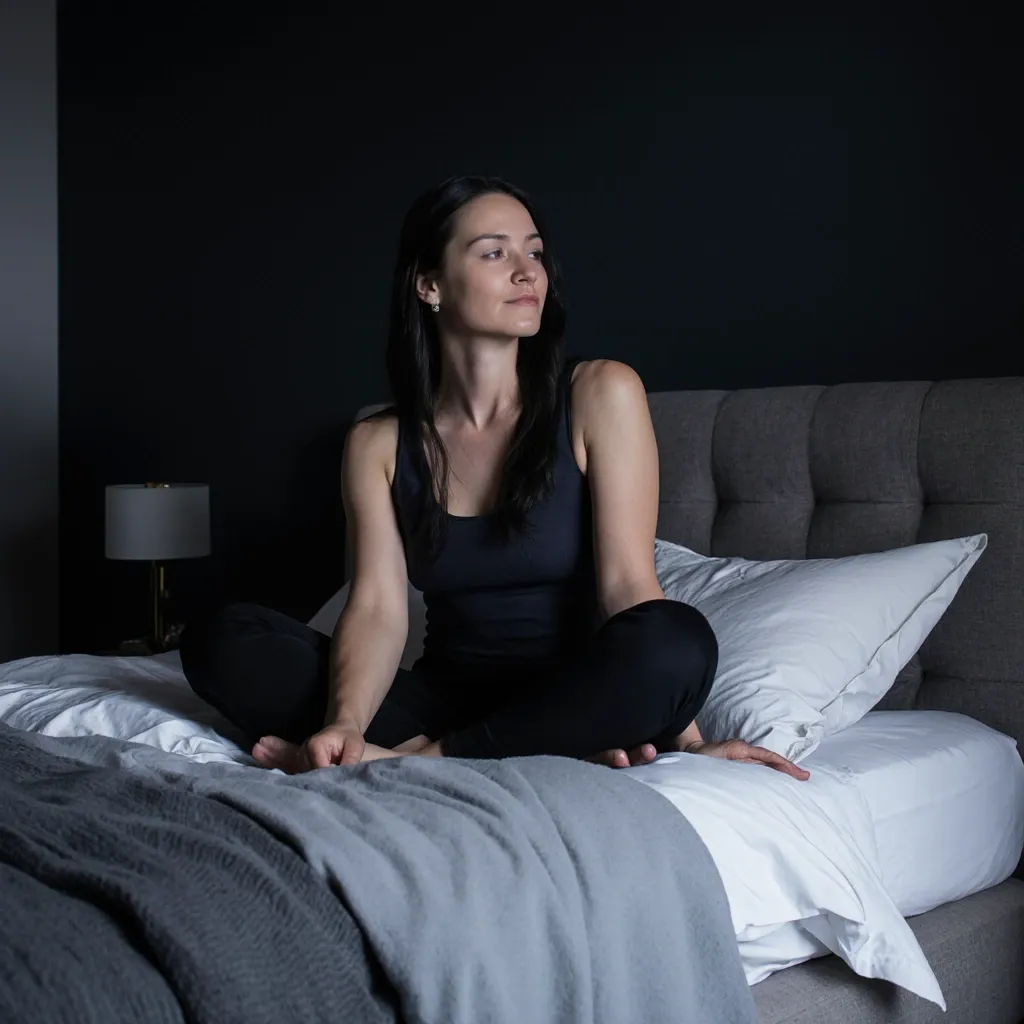
The Physiological Sigh — calms your nervous system in under 2 minutes:
- Normal inhale through your nose
- At the top — one short extra sniff, fully topping off your lungs
- Exhale slowly and completely through your mouth. Long. Empty everything.
- Repeat 3–5 times
⏱ 2 minutes · ⚠️ Don’t rush the exhale — that’s what activates the vagus nerve · ✅ Feel even a small shift? That’s your nervous system responding.
Why Your Nervous System Is Preventing Sleep
Sleep requires one biological condition: genuine parasympathetic activation. Your body must shift from sympathetic mode — alert, scanning, braced — to parasympathetic rest: still, safe, slow.
For people with anxiety, chronic stress, or unresolved trauma, this transition doesn’t happen automatically. The nervous system stays on guard. Not dramatically. Just enough. A low hum of activation that keeps real sleep perpetually at arm’s length.
This is why nothing you tried worked. Standard sleep advice addresses your environment — not the biological mechanism keeping you awake.
Somatic exercises communicate safety through the body — through breath, touch, sensation, and movement. They give your nervous system a felt experience of being okay. And the body responds to felt experience far more reliably than it responds to thoughts about sleep.
Your body is not broken. It learned to survive. Now it needs to learn that it’s safe to rest.
8 Somatic Exercises for Better Sleep
1. Extended Exhale Breathing
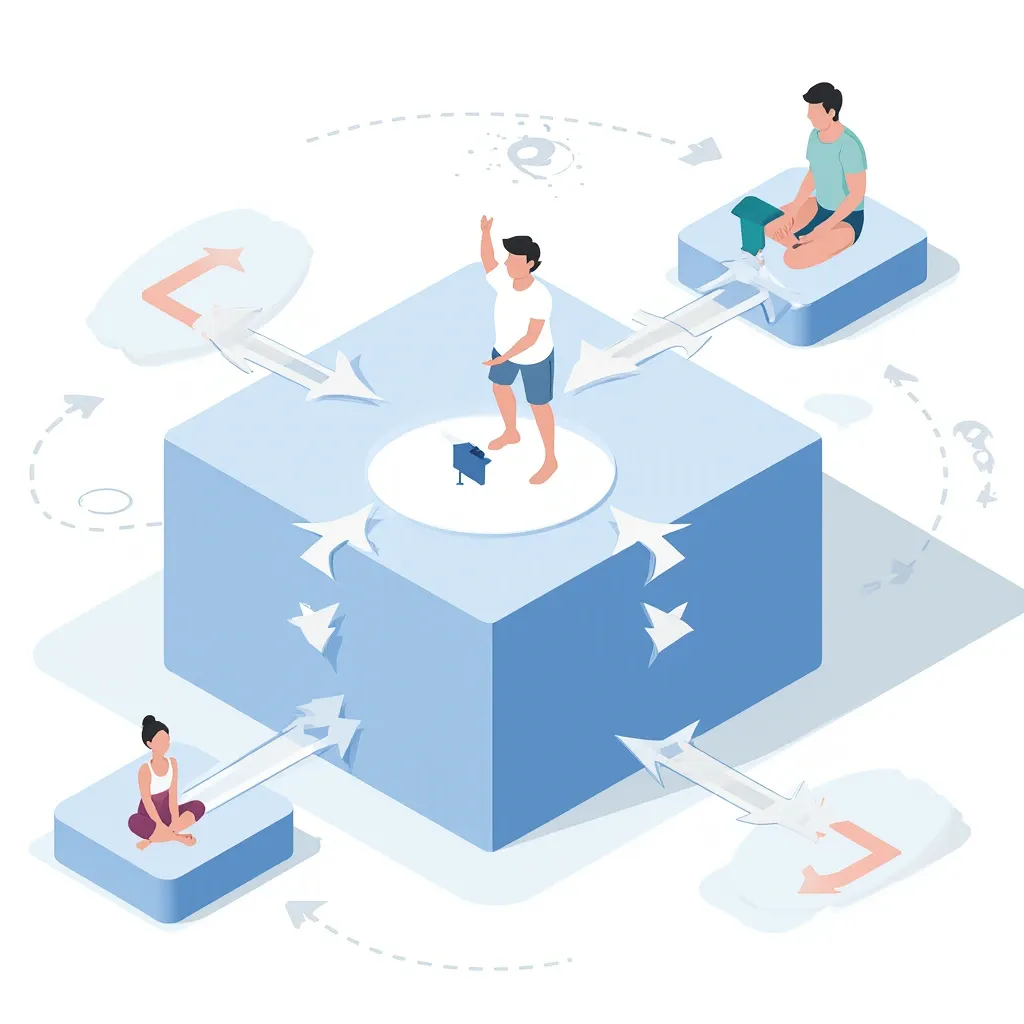
🧠 Use when: Winding down 10–15 min before bed
⚠️ Common mistake: Doing this while your mind is still running. Write down any urgent thoughts first — then begin.
Extended exhale breathing — any pattern where exhale is longer than inhale — is the most direct, fastest-acting method for parasympathetic activation. The prolonged exhale stimulates the vagus nerve and produces measurable heart rate deceleration within seconds.
4-7-8 breathing:
- Inhale through your nose for 4 counts
- Hold for 7 counts
- Exhale through your mouth for 8 counts
- Repeat 4–6 cycles
If the hold feels uncomfortable, simply breathe in for 4 and out for 8. The ratio matters more than the retention. For deeper breathwork, our Breathwork for Anxiety Guide covers five nighttime-adapted techniques.
2. Progressive Tension and Release
🧠 Use when: Body feels physically wired and tense
⚠️ Common mistake: Not tensing hard enough. The release is only as complete as the tension before it.
This practice works through contrast. Deliberately creating muscular tension before releasing it produces a more complete relaxation response than trying to relax from an already-tense state. You’re teaching your body the felt difference between held and released.
- Tense your feet as hard as you can for 5 seconds. Release completely.
- Move upward: calves → thighs → glutes → belly → chest → shoulders → hands → arms → face
- With each release, breathe slowly out and notice the spreading sensation
- After the full body, take 3 long exhales and let the body sink into the mattress
3. Pre-Sleep Orienting
🧠 Use when: Feeling hypervigilant or vaguely unsafe
⚠️ Common mistake: Moving your eyes too quickly. Fast eye movement is threat-scanning. Move slowly, with soft curiosity.
Orienting is the mammalian mechanism for completing a threat cycle and signaling safety. Animals after a scare instinctively look slowly around their environment — confirming the danger is gone — before returning to rest. We have the same system, and almost never use it deliberately.
- Sit or lie with eyes open in a softly lit room
- Let your gaze move slowly — softly visiting different objects with gentle curiosity
- When your gaze lands somewhere, pause. Notice color, texture, distance. Take 2–3 breaths.
- Continue for 3–5 minutes
- Say quietly: “I see where I am. I am here. I am safe.”
Here’s the part most people ignore: your nervous system can’t feel safe through willpower alone. It needs sensory evidence. That’s exactly what these next exercises provide.
4. The Somatic Body Scan (Sleep Version)
Part 2 of 3 — Going Deeper
You're off to a great start. The next section explores the practical steps and the science that makes this work.
Total read time: 12 min
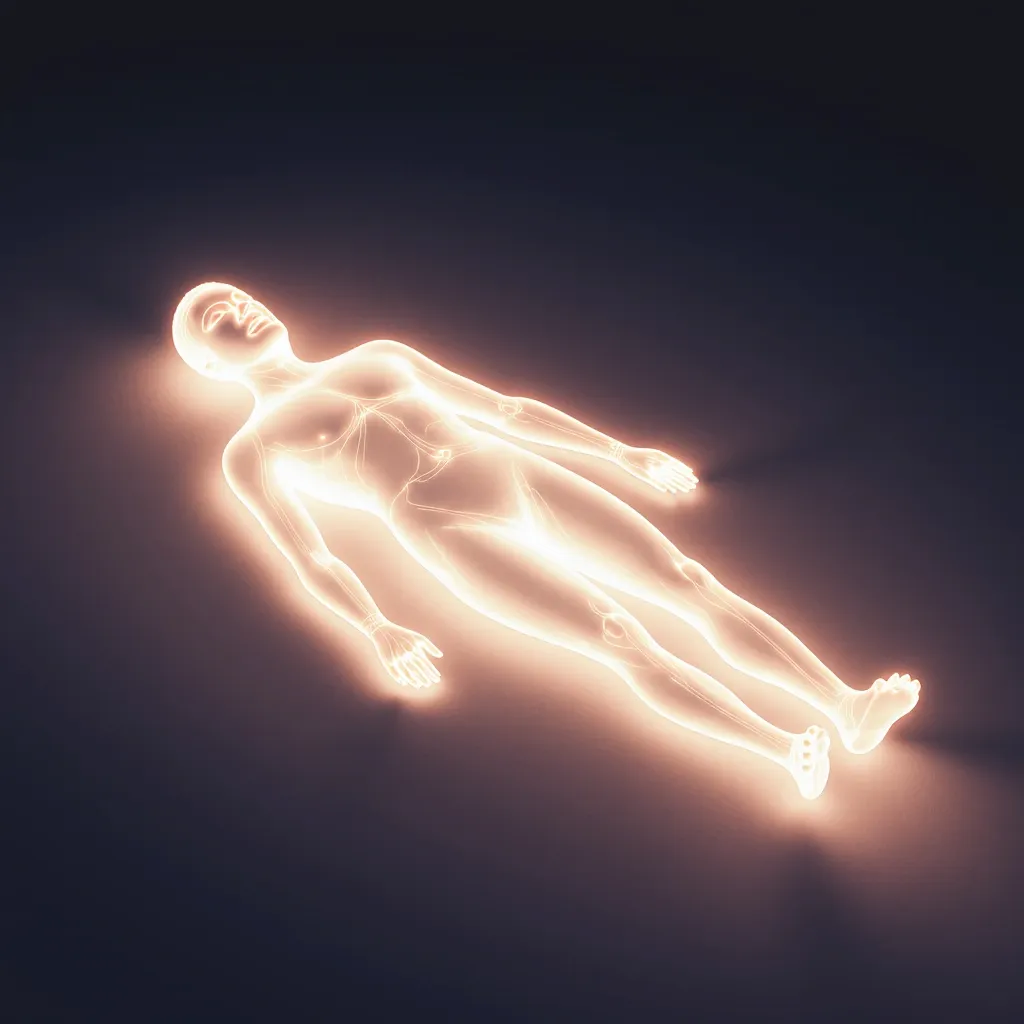
🧠 Use when: Final practice in bed — designed to take you under
⚠️ Common mistake: Trying to relax. Effort sustains arousal. Simply notice and allow — the distinction is everything.
This version is designed to ease the nervous system toward the hypnagogic state — the threshold between waking and sleep. Many people fall asleep before finishing. That is the goal.
- Lying comfortably, close your eyes. Begin at the crown of your head.
- Visit each area with permission: “I allow my scalp to soften. I allow my forehead to smooth. I allow my eyes to be heavy.”
- Move slowly downward through the body, 3–5 breaths at each area
- If the mind wanders, gently note “thinking” and return to sensation
If you’re tired of lying awake with a racing mind every single night — this is the exact system to reset your body.
Most people treat sleep as a nighttime problem. But your nervous system is regulated — or dysregulated — during the day. The 30-Day Somatic Reset Program fixes the root cause.
- Daily 10-minute practices — no experience needed
- Progressively rewires your threat-response system
- Sleep becomes the natural default, not the nightly battle
5. Self-Havening Touch
🧠 Use when: Emotionally activated — something from the day is weighing on you
⚠️ Common mistake: Stroking too fast. This needs to be slow, rhythmic, and gentle — more self-soothing than massage.
Havening touch uses gentle, repetitive stroking of specific skin areas to activate delta wave production — the brain waves associated with deep sleep — through mechanoreceptors that communicate directly with the threat-response system.
- Slowly stroke your upper arms from shoulder to elbow, back and forth
- After 2 minutes, move to your face: gently stroke from forehead down to cheeks
- Then to your hands: stroke the backs from knuckles to wrist
- Cycle through all three areas for 10–15 minutes with slow, gentle strokes
- Breathe slowly. Let the eyes become heavy.
If emotional content activates at night as 2 AM rumination, the Somatic Calm Journal includes a nightly body-based reflection practice designed to discharge that content before sleep.
6. Somatic Grounding Before Bed
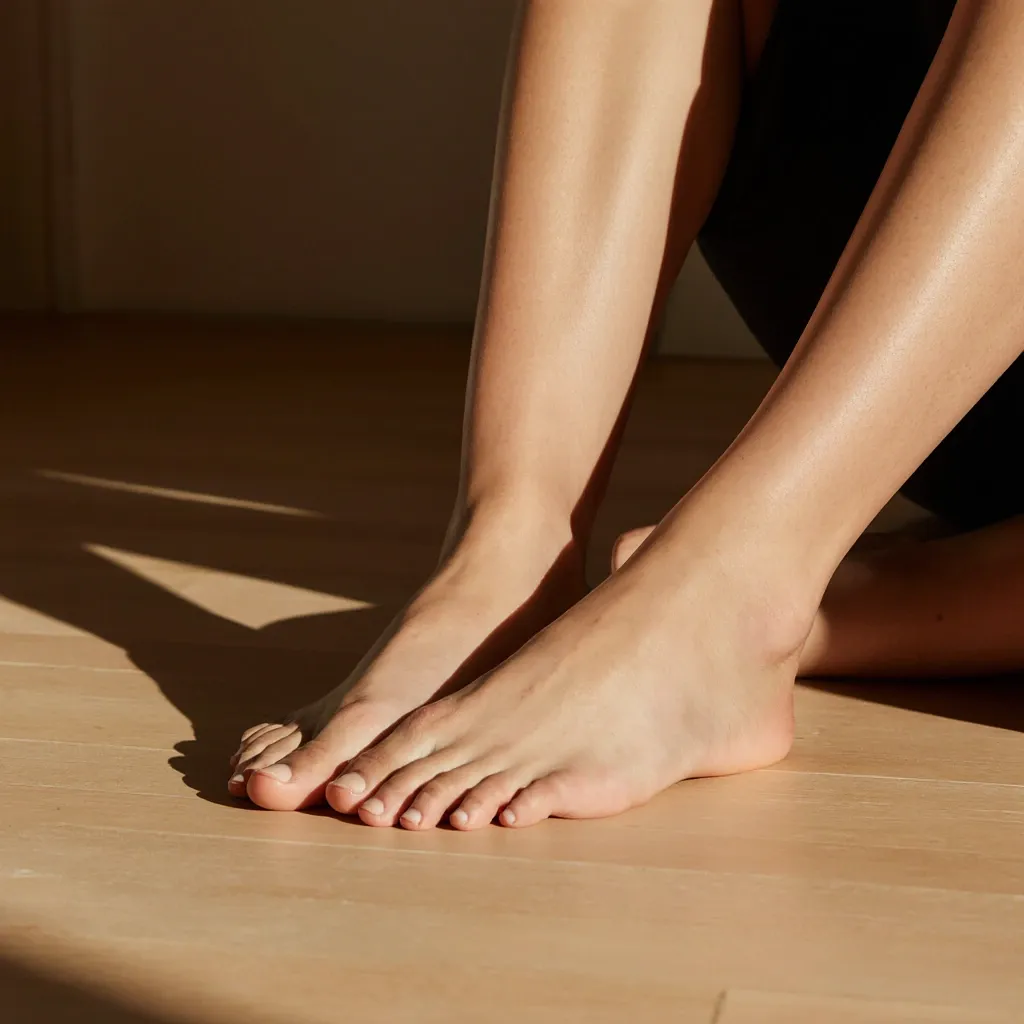
🧠 Use when: Mind spinning with worries about tomorrow
⚠️ Common mistake: Doing this lying down with eyes closed. Start seated with feet on the floor — physical contact with the ground is what makes grounding work.
Anxiety keeps the nervous system locked in anticipated future threat — neurologically incompatible with sleep. Grounding brings your system into the present moment — the only place rest can actually occur.
- Sit on the edge of your bed. Press both feet firmly into the floor. Feel pressure, texture, temperature.
- Press your hands onto your thighs. Feel the warmth and weight.
- Press your back against the headboard. Feel the support behind you.
- Take 5 slow breaths, feeling all three contact points simultaneously.
- Say quietly: “I am here. This is now. I am in this room.”
For more variations: somatic grounding techniques for anxiety.
You’re not dealing with insomnia. You’re dealing with a nervous system that never got the signal it was safe to stop. The next two exercises are specifically for that.
7. Gentle Leg Tremoring

🧠 Use when: Tension in hips and legs; breathing alone doesn’t reach it
⚠️ Common mistake: Forcing the tremoring. Create the conditions — don’t manufacture the response.
A gentle adaptation of TRE (Trauma Release Exercises) for pre-sleep use. The body naturally discharges stress through tremoring — animals do it instinctively after escaping threat. We’ve learned to suppress this mechanism. It’s still there, and it still works.
- Lie on your back with knees bent, feet flat on the bed
- Allow your knees to fall open and bring them back together. Repeat 5–10 times.
- Let your knees fall open and hold. Notice if legs begin to tremble naturally.
- If tremoring begins, allow it for 2–5 minutes without trying to control it
- To stop: straighten legs, take 3 slow exhales, and notice the settling
8. Physiological Sigh for Middle-of-Night Waking
🧠 Use when: Wake at 2–4 AM with mind immediately turning on
⚠️ Common mistake: Checking the time. This immediately triggers cortisol as your brain calculates sleep loss. Do not check. Just breathe.
Middle-of-night waking is often a dysregulated HPA axis interacting with the natural early-morning cortisol rise. The physiological sigh is the fastest nervous system intervention currently validated by neuroscience.
- Normal inhale through your nose
- At the top — one more short sniff, fully topping off the lungs
- Exhale long and slow through the mouth. Empty everything.
- Repeat 3–5 times
- Move directly into self-havening touch or the sleep body scan
If middle-of-night waking is chronic, read our morning nervous system reset routine — sleep quality is built during the day, not just at night.