TRE Shaking Exercises: How to Release Stored Stress From Your Body
amine
12 min read
Your body is holding stress you cannot think your way out of. That tension in your shoulders, that tightness in your chest, that low-level anxiety that never fully goes away — it is not in your head. It is stored in your nervous system, in your muscles, in the tissue that braced itself during every stressful moment you moved through without fully releasing.
TRE shaking exercises were developed specifically for this. Not to help you think differently about stress — but to help your body physically discharge what it has been holding. And once you understand how the mechanism works, the shaking makes complete sense.
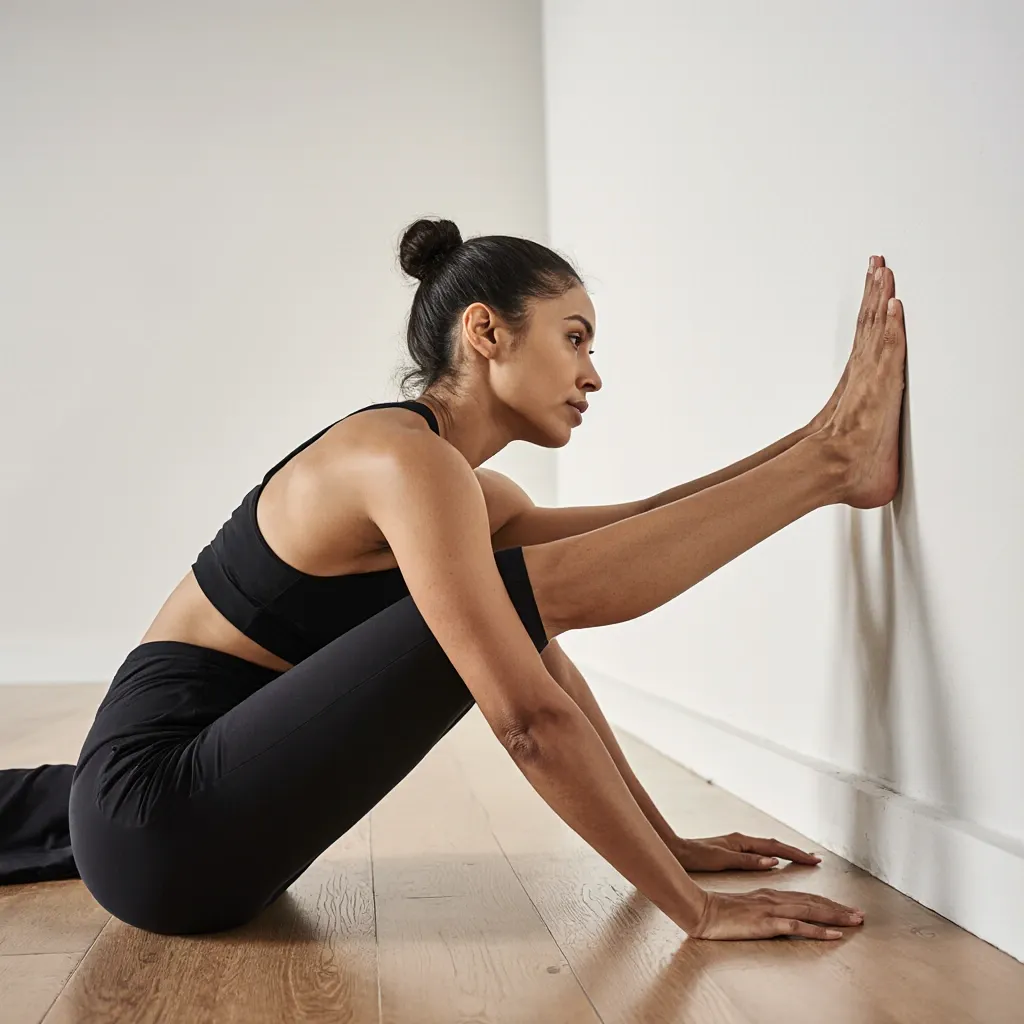
TRE exercises activate natural body shaking to release stored tension — a built-in mechanism of your nervous system.
How to Do TRE Shaking Exercises (Quick Answer)
TRE shaking exercises help release tension and stored stress through natural, involuntary body movement.To do TRE shaking:
Start with a wall sit (2–3 minutes) to fatigue the legs and load the psoas
Move to a wide-leg wall sit (1–2 minutes) to target deeper muscle groups
Do a standing hip stretch (1 minute each side) to release the psoas
Lie down in a butterfly position with hips raised (2–3 minutes)
Allow gentle shaking to begin and continue naturally for 10–15 minutes — do not force it
Straighten your legs to stop, then rest completely still for 5 minutes
Most people feel noticeably calmer after one session — even if the tremoring was mild. You don’t need to force anything. Your body knows what to do.
⚠️ Before You Start — Read This
Safety First — This Applies to You
Somatic shaking (TRE) can bring up strong sensations — physical and emotional. Most people experience this as deeply relieving. A small number may find it activating, especially those with trauma histories.
If you have a history of significant trauma or PTSD, start with the 60-second gentle version below before attempting the full sequence
Stop immediately if you feel overwhelmed, dissociated, or unable to self-regulate
Keep your first 3–4 sessions under 15 minutes total
This is educational content only — not clinical guidance. Work with a somatic therapist if you have a complex trauma history
Try This First: 60-Second Gentle Shake
Before the full sequence, do this right now. It takes one minute.
👉 1-Minute Gentle Shake
Stand with knees slightly bent and feet hip-width apart.
Begin gently bouncing from the knees — just a slight up-down movement.
Let the movement travel naturally through your hips and torso. Don’t force it.
After 60 seconds, stop and stand completely still.
Notice: is there any tingling? Warmth? A different quality of stillness?
That sensation is your nervous system beginning to discharge. Everything in the full sequence builds on this.
Why TRE Shaking Exercises Release Stress (The Science)
TRE — Tension and Trauma Releasing Exercises — was developed by Dr. David Berceli, a trauma specialist who observed that humans and animals share the same neurobiological stress-release mechanism: involuntary tremoring. When your nervous system activates under threat, it floods your body with adrenaline and cortisol. Your muscles brace. Your heart rate spikes. Your body prepares to fight, flee, or freeze.
If that activation energy is never discharged — which happens in most modern stress situations where there is nothing physical to fight or flee from — it gets stored. In your muscles as chronic tension. In your nervous system as a raised baseline threat level. In your body as fatigue, hypervigilance, anxiety without obvious cause.
Watch any animal after a near-miss with danger. They shake vigorously, then they are fine. The fight or flight response completed itself naturally. TRE deliberately invokes that same biological discharge mechanism in the human body.
TRE Shaking Exercises: Full Step-by-Step Guide
Do this sequence in exact order. Each step progressively fatigues the legs and psoas muscle to create the conditions for neurogenic tremoring to arise naturally. Do not skip ahead.
Step 1 — Wall Sit (2–3 Minutes)
The wall sit creates the muscular conditions for the tremor to activate naturally.
✔ Time: 2–3 min · ✔ Goal: Fatigue the quadriceps and load the psoas
Stand with your back flat against a wall. Slide slowly down until your thighs are parallel to the floor — as if sitting in an invisible chair. Knees at roughly 90 degrees. Hold for 2 to 3 minutes and breathe slowly throughout.
What you might feel: Muscular burning in the thighs — this is correct. Legs beginning to tremble — this means the mechanism is already activating.
Most common mistake: Going too shallow. The thighs need to be roughly parallel to the floor to load the psoas effectively.
💡 Tip: If your legs start shaking during the wall sit, allow it. Don’t suppress it — that shaking is the discharge beginning early.
Step 2 — Wide-Leg Wall Sit (1–2 Minutes)
✔ Time: 1–2 min · ✔ Goal: Shift load into inner thighs and deeper pelvic muscles
Remaining against the wall at the same height, slide your feet wider than hip-width apart with toes pointed slightly outward. Continue holding and keep breathing slowly.
What you might feel: Trembling in the inner thighs or hips. This is completely normal — breathe into it rather than tensing against it.
Continue Reading
Part 2 of 3 — Going Deeper
You're off to a great start. The next section explores the practical steps and the science that makes this work.
Total read time: 12 min
Part 2 of 3
Step 3 — Standing Hip Stretch (1 Minute Each Side)
✔ Time: 2 min total · ✔ Goal: Release the psoas — the primary survival-posture muscle
Come away from the wall. Step your right foot forward into a gentle lunge. Lower your left knee toward the floor. Feel the stretch through the left hip flexor and psoas. Hold 60 seconds, breathing slowly. Switch sides.
What you might feel: A wave of relief in the hip. Some people feel unexpected emotion here — this is normal. The psoas holds a great deal of stored stress.
Step 4 — Floor Butterfly With Raised Hips (2–3 Minutes)
The floor butterfly with raised hips is where neurogenic tremoring most reliably activates.
✔ Time: 2–3 min · ✔ Goal: Trigger neurogenic tremoring in legs and pelvis
Lie on your back on a mat. Bring the soles of your feet together so your knees fall open in a butterfly position. Slowly raise your hips 4 to 6 inches off the floor and hold. Breathe continuously and allow whatever happens in your body without interference.
What you might feel: Trembling in the legs, hips, or pelvis. This is the neurogenic tremor activating. It is not a seizure. It is not a loss of control. It is your nervous system finding its natural discharge rhythm.
Step 5 — Allow the Tremor to Complete (10–15 Minutes)
✔ Time: 10–15 min · ✔ Goal: Let the nervous system discharge stored activation
Lower your hips back to the floor. Keep the butterfly foot position. Move your knees slightly closer or wider to find what feels right. Stay for 10 to 15 minutes. Breathe continuously. Allow the tremor to travel wherever it goes — legs, pelvis, torso, shoulders, jaw.
What you might feel: This is where the actual stress discharge happens. If emotion arises — tears, laughter, unexpected relief or sadness — allow it. This is not breakdown. This is release.
To stop at any time: Simply straighten your legs flat on the floor. The tremoring stops within seconds. You are always in complete control.
If your body struggles to release fully even after several sessions, the Breathwork Guide pairs somatic shaking with 7 targeted breathwork practices designed to reach deeper layers of nervous system activation — including a 5-minute Emergency Calm sequence for acute moments. → Explore the Breathwork Guide
Step 6 — Integration After TRE (5 Minutes — Do Not Skip)
The 5-minute integration period after TRE is where the nervous system consolidates the discharge — never skip this step.
✔ Time: 5 min · ✔ Goal: Nervous system integration and consolidation
When you feel ready to close, straighten your legs slowly and lie completely still on your mat for 5 full minutes. Do not reach for your phone. Do not stand up immediately. Breathe naturally and let your body settle into the stillness.
What you might feel: Warmth spreading through the limbs, a softening of chronic tension, a quality of calm that feels different from ordinary relaxation. Skipping this step significantly reduces the regulatory benefit of the entire session.
Simple Somatic Shaking — No Setup Required
If the full TRE sequence feels like too much to begin with, this simplified version works immediately. Stand with your feet hip-width apart and knees slightly soft. Begin by gently shaking your hands — just the hands. Let the movement travel naturally up through your wrists, forearms, elbows, and into your shoulders.
After 2 minutes, add gentle bouncing from your knees — a subtle up-down motion through the legs. Let it ripple up through your hips and torso. Continue for 3 to 5 minutes total, then stop all movement and stand completely still. Notice the tingling, the warmth, the quality of stillness that follows.
The calm after somatic shaking is your nervous system completing its discharge — warmth, softness, and genuine rest become available.
Structured daily practice
Want to combine shaking with a complete daily reset system?
The 30-Day Somatic Reset integrates TRE shaking with breathwork, grounding, and body scanning into a 15-minute daily protocol — progressive, beginner-friendly, and built to change your baseline.
Session 1: The tremoring may feel strange or not come at all. Both are normal. Your nervous system is learning to trust the process.
Sessions 2–3: The tremor becomes easier to access. It may travel further through the body. You may notice unexpected emotion.
Sessions 4–5: Most people begin noticing measurable changes — reduced baseline tension, improved sleep, less reactivity in daily life.
Weeks 2–4: With 2–3 sessions per week, chronic tension patterns begin to shift. Many people report significant reductions in anxiety, jaw clenching, lower back pain, and sleep difficulty.
Almost There
Part 3 of 3 — The Final Section
One last part — wrapping everything up with your action plan and answers to the most common questions.
You're 66% through the full article
Part 3 of 3
When Not to Do TRE
Avoid TRE or consult a therapist first if:
You have a history of severe trauma or PTSD with flashbacks or dissociation
You are currently in an acute mental health crisis
You have a heart condition or recent surgery
The shaking triggers overwhelming fear or emotional flooding you cannot self-regulate out of
You are pregnant (consult your healthcare provider first)
Mistakes That Reduce TRE Results
Forcing the tremor. You cannot manufacture neurogenic tremoring. The exercises create the conditions — the tremor arises naturally when those conditions are met. Trust the sequence.
Doing too much too soon. One session of 15 to 20 minutes is enough, especially in the first month. Titration — small doses, consistently — is the method.
Skipping the integration period. The 5 minutes of stillness after tremoring are not optional. This is when the nervous system processes and consolidates the discharge.
Frequently Asked Questions
Yes — for most people experiencing general anxiety and chronic stress. The main safety guidelines are: keep sessions under 20 minutes in the first month, always complete the 5-minute integration period, and stop immediately if the experience becomes overwhelming. If you have severe PTSD, significant dissociation, or a complex trauma history, begin with a certified TRE provider before self-practicing.
Very common in the first one or two sessions. The chronic suppression of the tremor response is itself a learned stress pattern — the body needs permission and repetition before it allows itself to shake. Try holding the wall sit position longer, or reduce any effort to control the outcome. The tremor will come with consistent practice.
Yes — and this surprises many people the first time. Stored stress often has emotional content attached: grief, anger, fear, or sadness that was never fully expressed. As the body releases its physical holding pattern, those emotions can surface. Allow whatever arises without judgment. Your body knows what it is processing.
Yes. Neurogenic tremoring is a natural, involuntary discharge mechanism — not a seizure, not a loss of control, and not harmful. It is the same mechanism that causes your hands to shake after a near-miss car accident, and the same mechanism animals use to discharge stress after danger passes. The tremor is safe and beneficial. You can stop it at any time by simply straightening your legs.
Because your nervous system is doing exactly what it was designed to do. The tremor is the body completing a stress response that was activated but never finished — discharging the stored muscular tension that fight-or-flight created. It is your body healing itself through its own built-in mechanism.
Many people feel a noticeable shift after the first 1 to 3 sessions — reduced tension, unexpected calm, better sleep. Consistent, measurable change such as reduced baseline anxiety and improved emotional regulation typically becomes clear after 4 to 6 weeks of regular practice at 2 to 3 sessions per week.
Your body has always known how to do this. It was doing it automatically before you learned to hold still, look composed, and suppress the shaking. TRE is not a technique you are learning from scratch — it is a biological capacity you are allowing back.
Start with one session this week. Follow the six steps in order. Rest for 5 minutes afterward. Notice what shifts in your body in the hours and days that follow.
📚 References & Scientific Sources
Berceli, D., & Napoli, M. (2012). A proposal for a mindfulness-based trauma prevention program for social work professionals. Complementary Health Practice Review. Berceli, D. (2015). Shake It Off Naturally: Reduce Stress, Anxiety and Tension with TRE. CreateSpace.
Porges, S.W. (2011). The Polyvagal Theory: Neurophysiological Foundations of Emotions, Attachment, Communication, and Self-Regulation. W. W. Norton & Company.
Levine, P.A. (1997). Waking the Tiger: Healing Trauma. North Atlantic Books.
Levine, P.A. (2010). In an Unspoken Voice: How the Body Releases Trauma and Restores Goodness. North Atlantic Books.
van der Kolk, B. (2014). The Body Keeps the Score: Brain, Mind, and Body in the Healing of Trauma. Viking.
Ogden, P., Minton, K., & Pain, C. (2006). Trauma and the Body: A Sensorimotor Approach to Psychotherapy. W. W. Norton & Company.
Journal of Military, Veteran and Family Health — TRE pilot study results referenced in peer-reviewed literature on somatic trauma release interventions.
⚠️ Medical Disclaimer
This article is provided for educational and informational purposes only and is not a substitute for professional medical advice, diagnosis, or treatment. The somatic exercises and techniques described here are general wellness practices — they are not clinical interventions and should not be used as a replacement for professional care.
If you are experiencing symptoms of anxiety, trauma, PTSD, or any mental health condition, please consult a licensed mental health professional or physician before beginning any new somatic practice. Do not delay seeking professional care because of information you have read on this website. If you are in crisis, contact a mental health crisis helpline in your country immediately.